We arrive to de Akkers from Schiedam, along the Harreweg. As we approach, from both sides of the Harreweg rooftops peak through the canopies, as if communicating with each other. A few cows graze on the grass, there is a nice smell of wet grass, and we begin to see this slither of grassland as a wedge of the polder, tucked between new and old homes.
Although we have heard about the soil subsiding, we are surprised by the contrast this produces - homes with a patina, some with gardens, a few lichens growing on roof tiles, but a brand new street beneath it, spotless, with brand new front yards, waiting for some signs of gardening, play, and everyday life. The rather dramatic history of a “sinking” ground is visible only through the few centimetres of slope which lead from front yards to sidewalk. We begin to think that this complicated relation with the ground is actually what unites De Akkers as a community, that the shared difficulty gives the place a strong identity - perhaps, in a few years, this will be a story told to newcomers.
We remember some engravings we love from Gulliver’s travels, his city of Laputa, flying above the earth in virtue of a magnetic field; an illustration of the imaginary city of Baucis from Italo Calvino’s Invisible Cities, suspended on stilts, sometimes flickering with the wind; drawings from Underground, the collection of illustrations by David Macaulay, revealing a city without soil, where foundation poles, pipes, tunnels and cables become the mirror of the city above; the depiction of dovecotes as they appear on old Delft Blue tiles, precariously suspended above ground, like whimsical architectural follies, or gigantic herons. Above all, we think of the roofs for haystacks, suspended on pullies, raised and lowered when needed, which will later start to appear along our route towards Delft.
It is the ground that is lowering, and not the homes that are rising, yet, the image of a flying neighbourhood, suspended above the grassy meadows of the polder, which obstinately refuses to comply with its new appointed use, comes to mind. We now think of De Akkers as a place of flying homes, rather than of sinking ground.
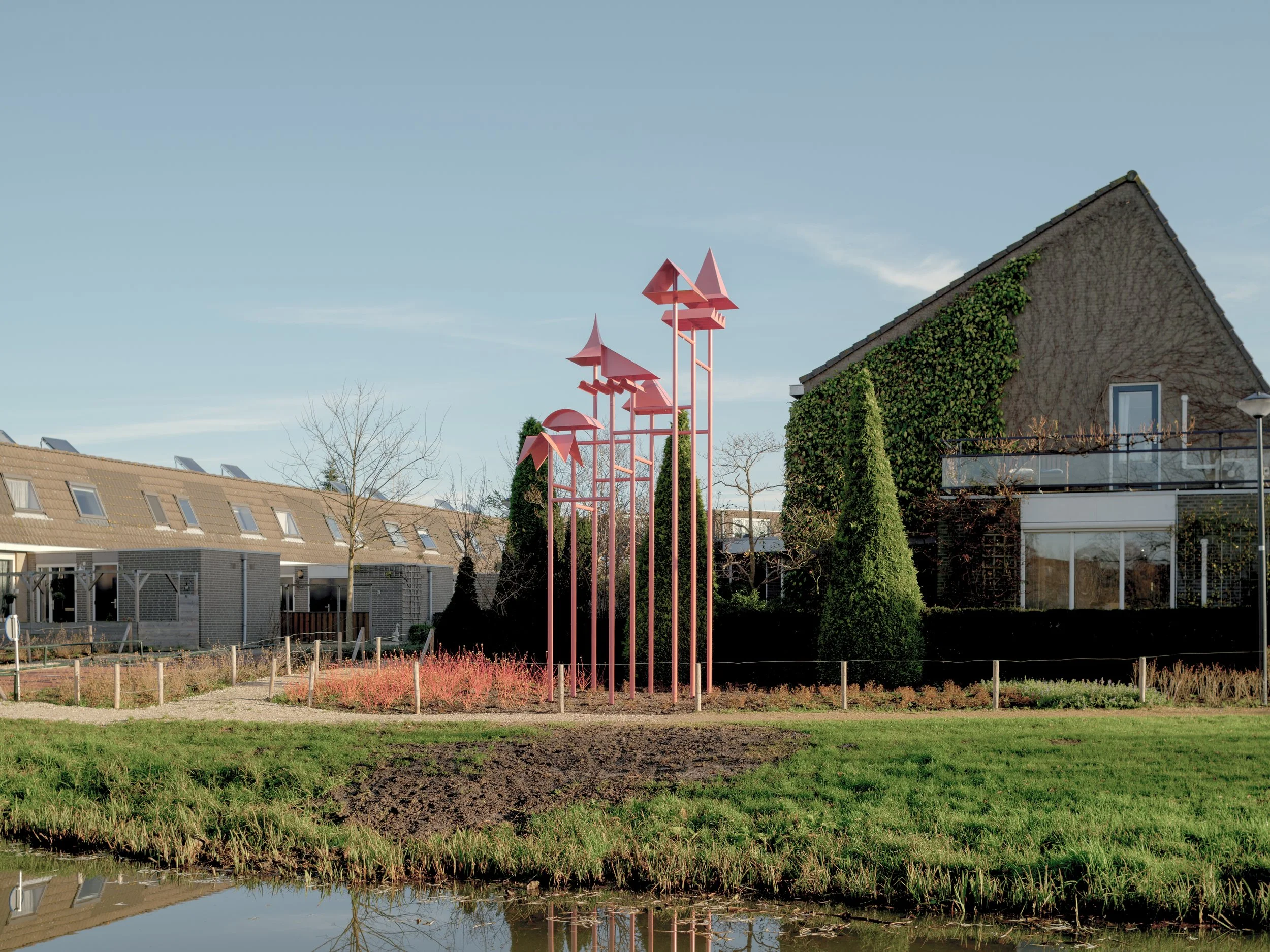
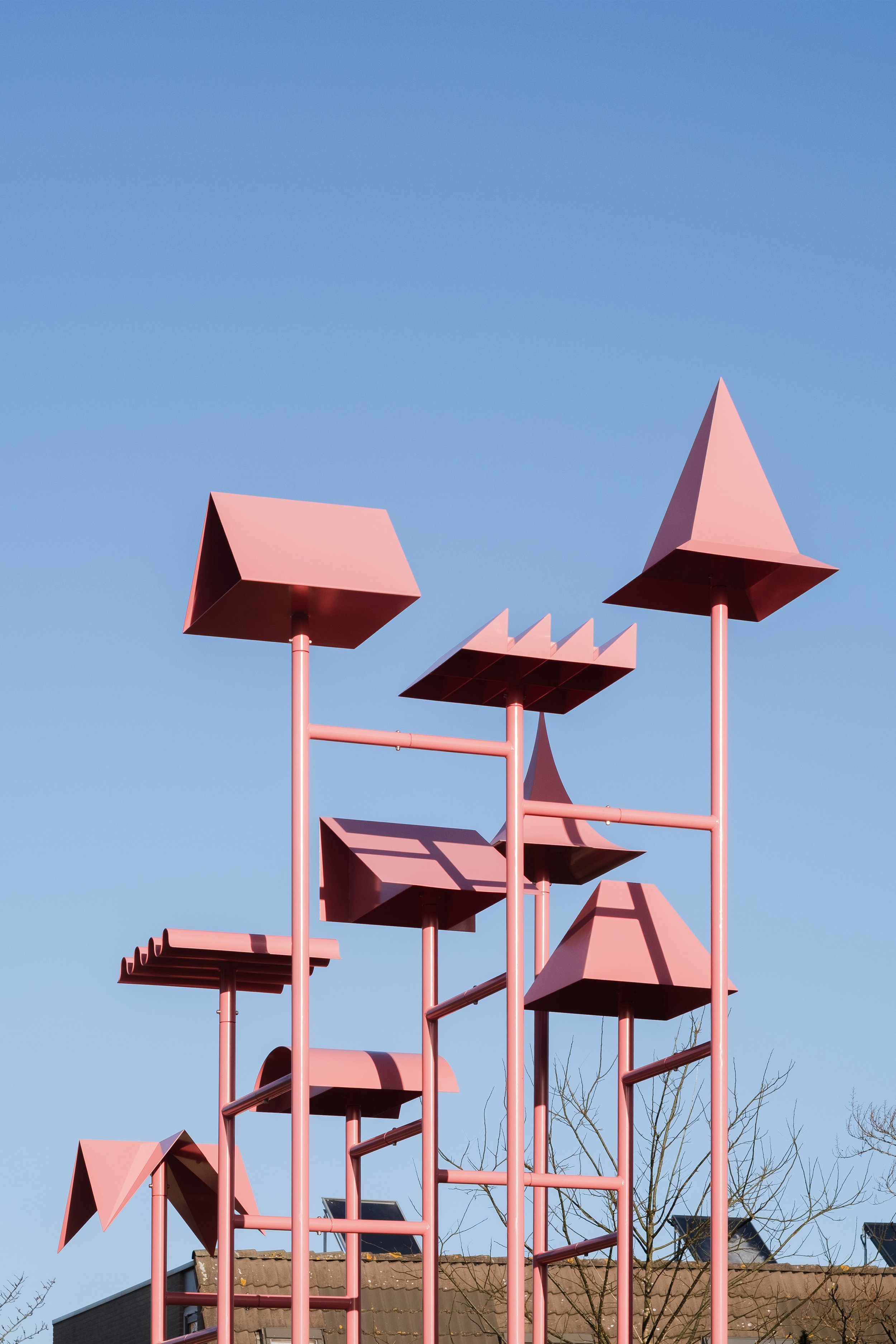
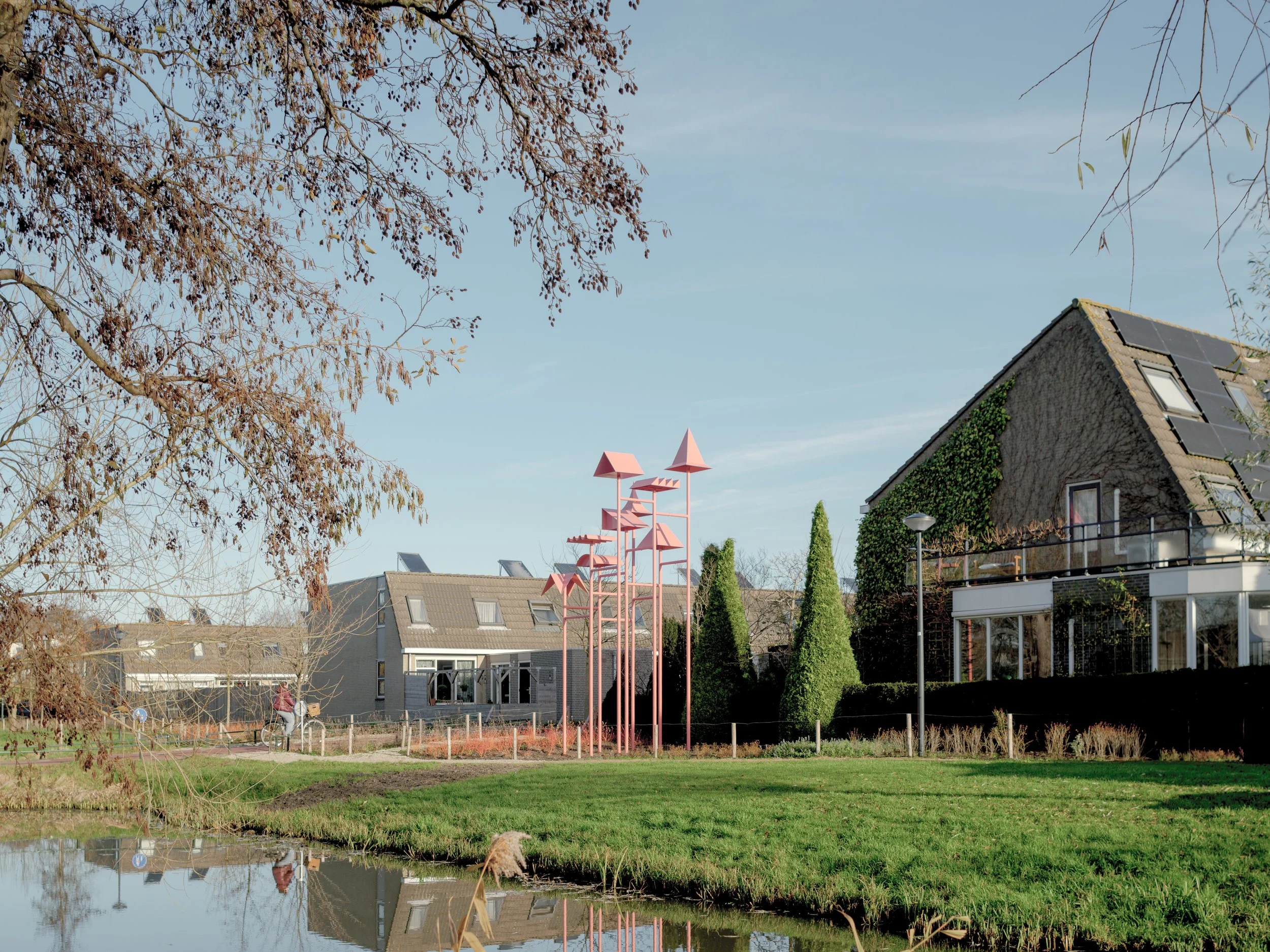
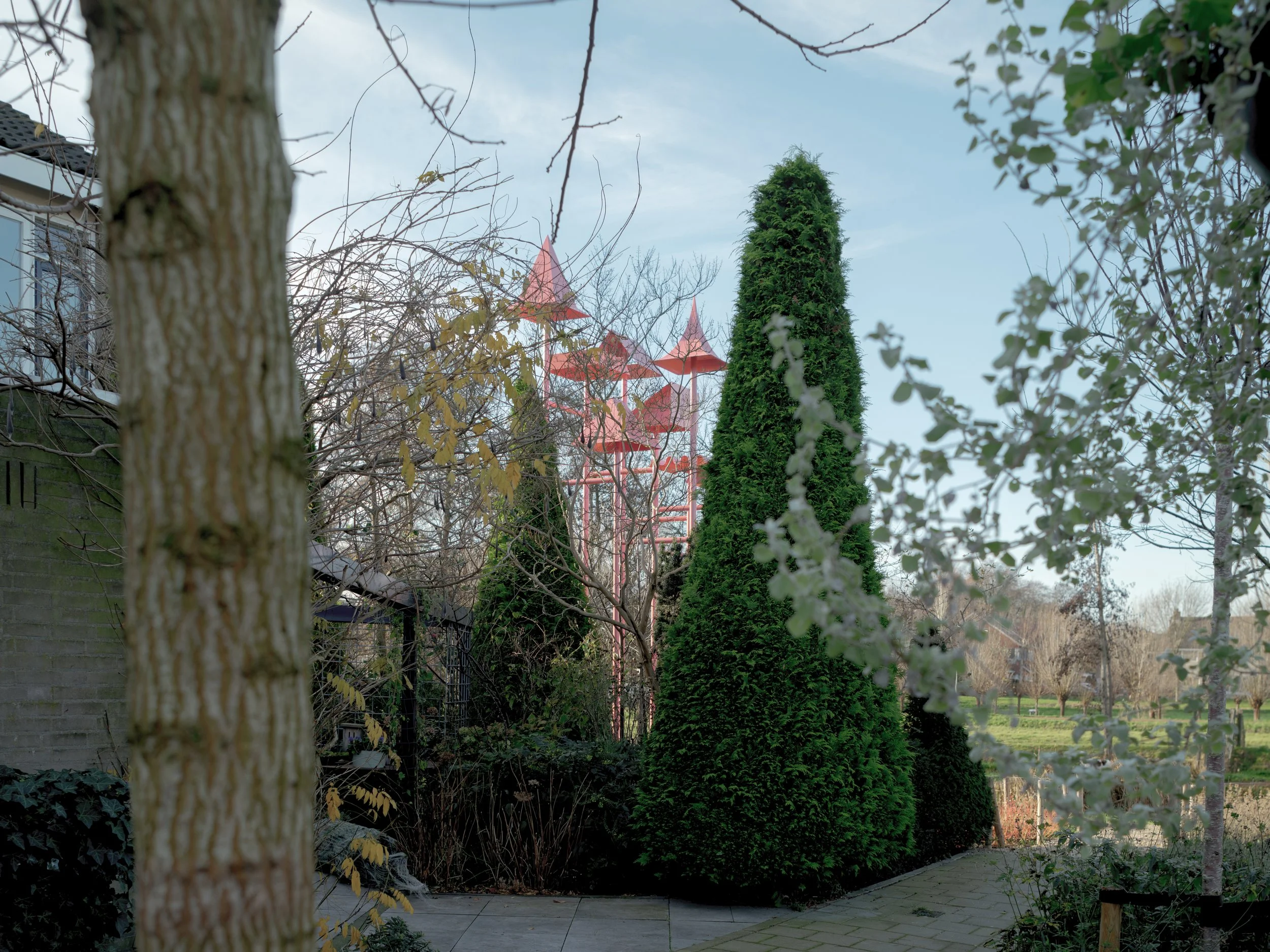
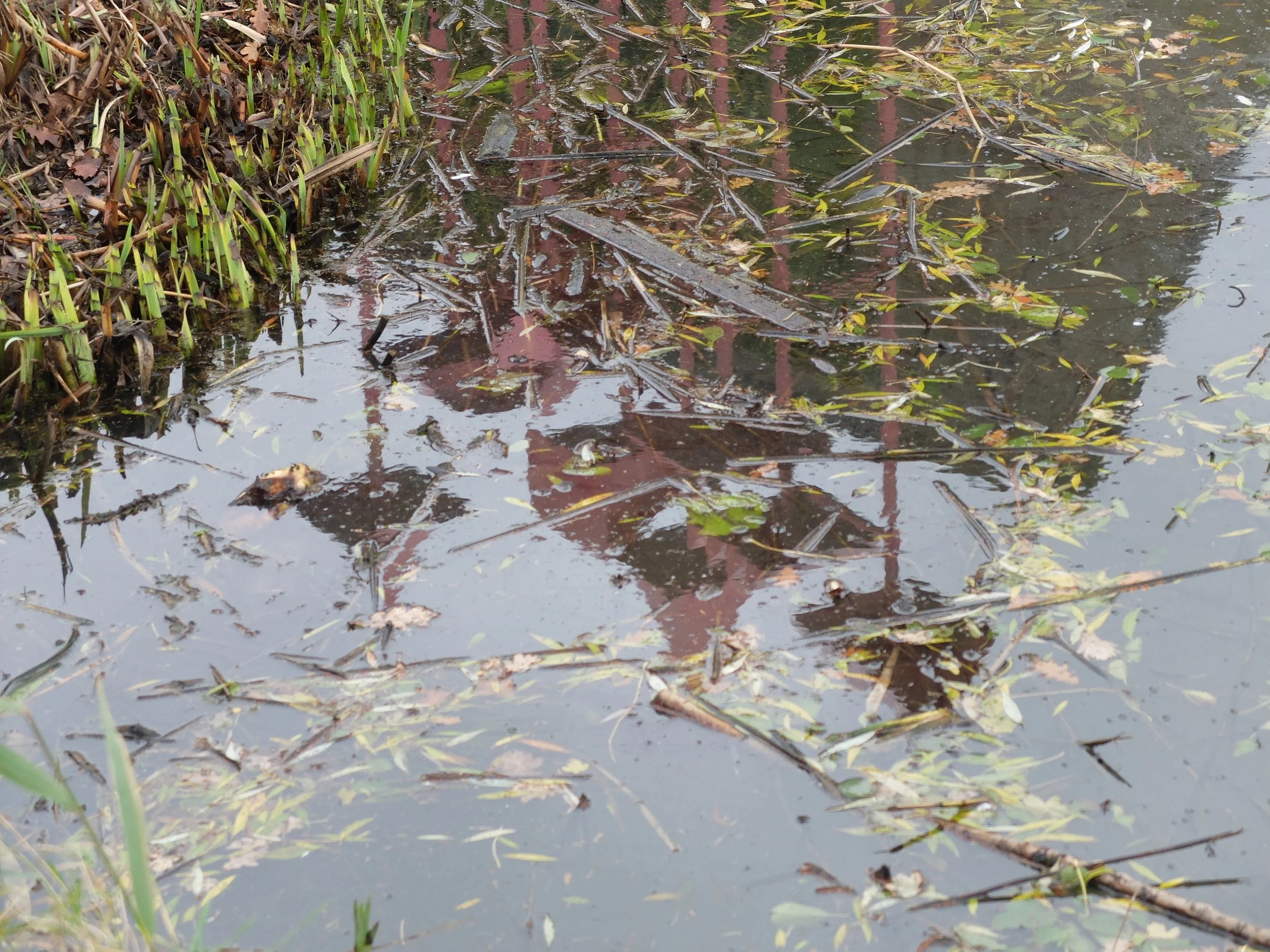
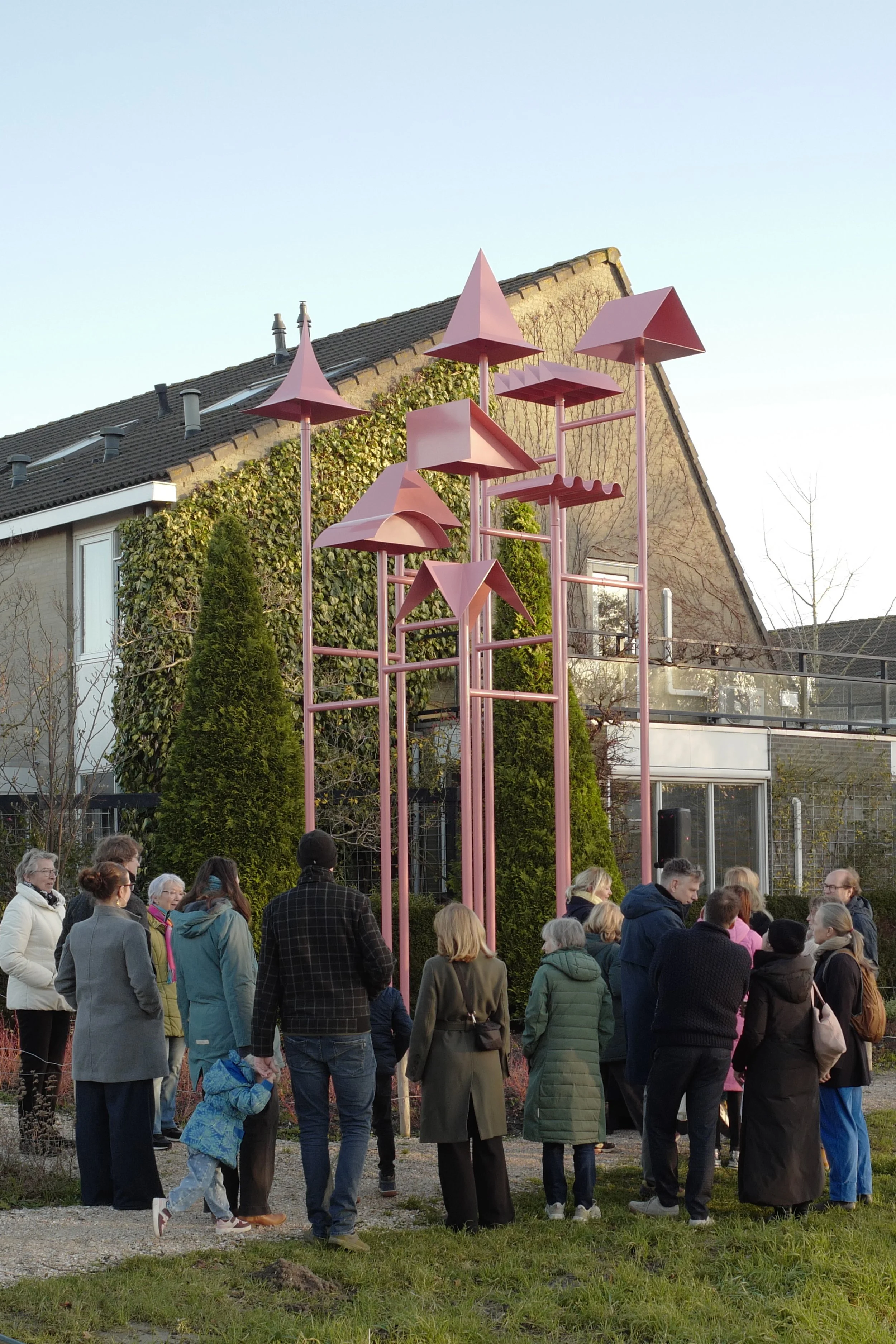
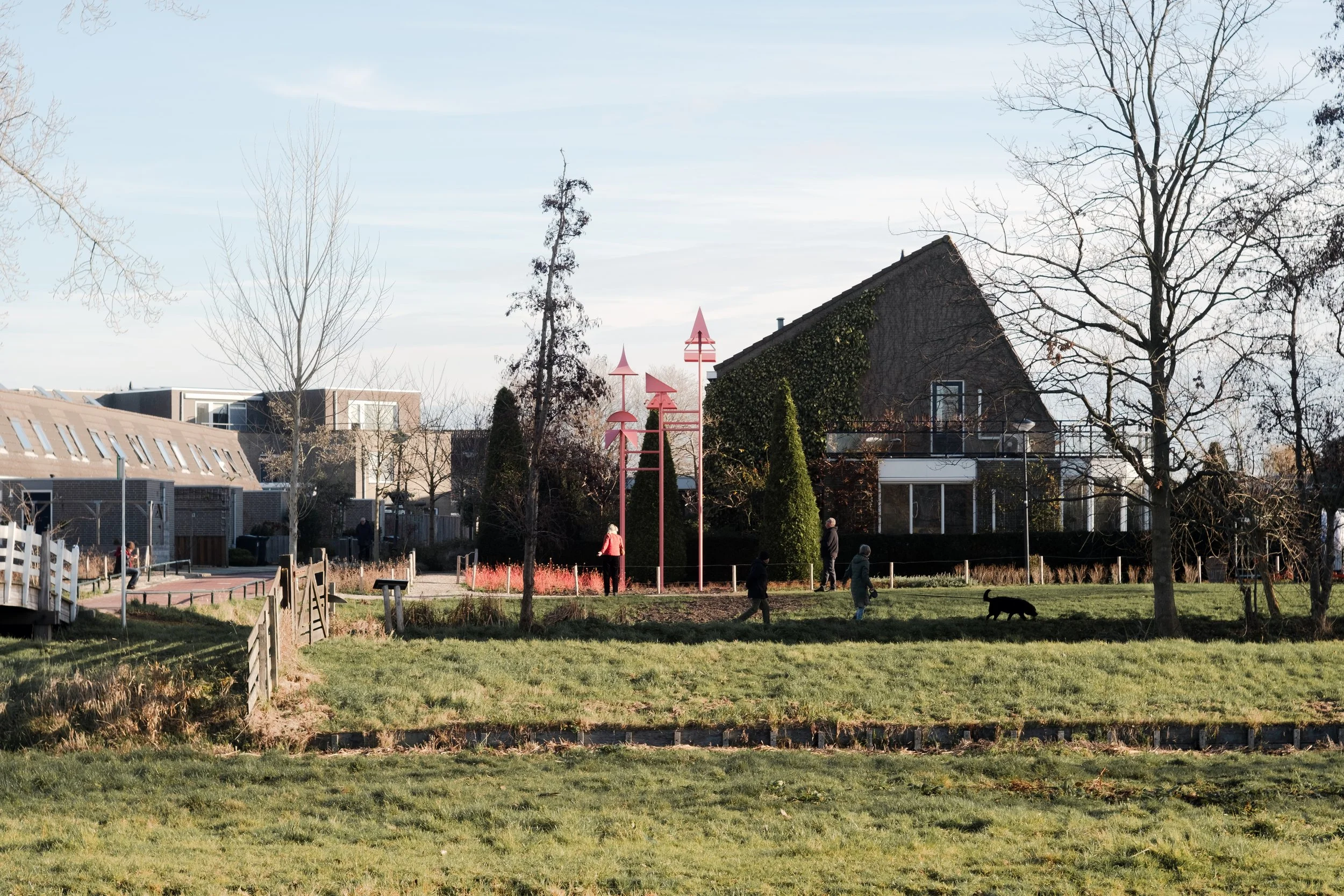
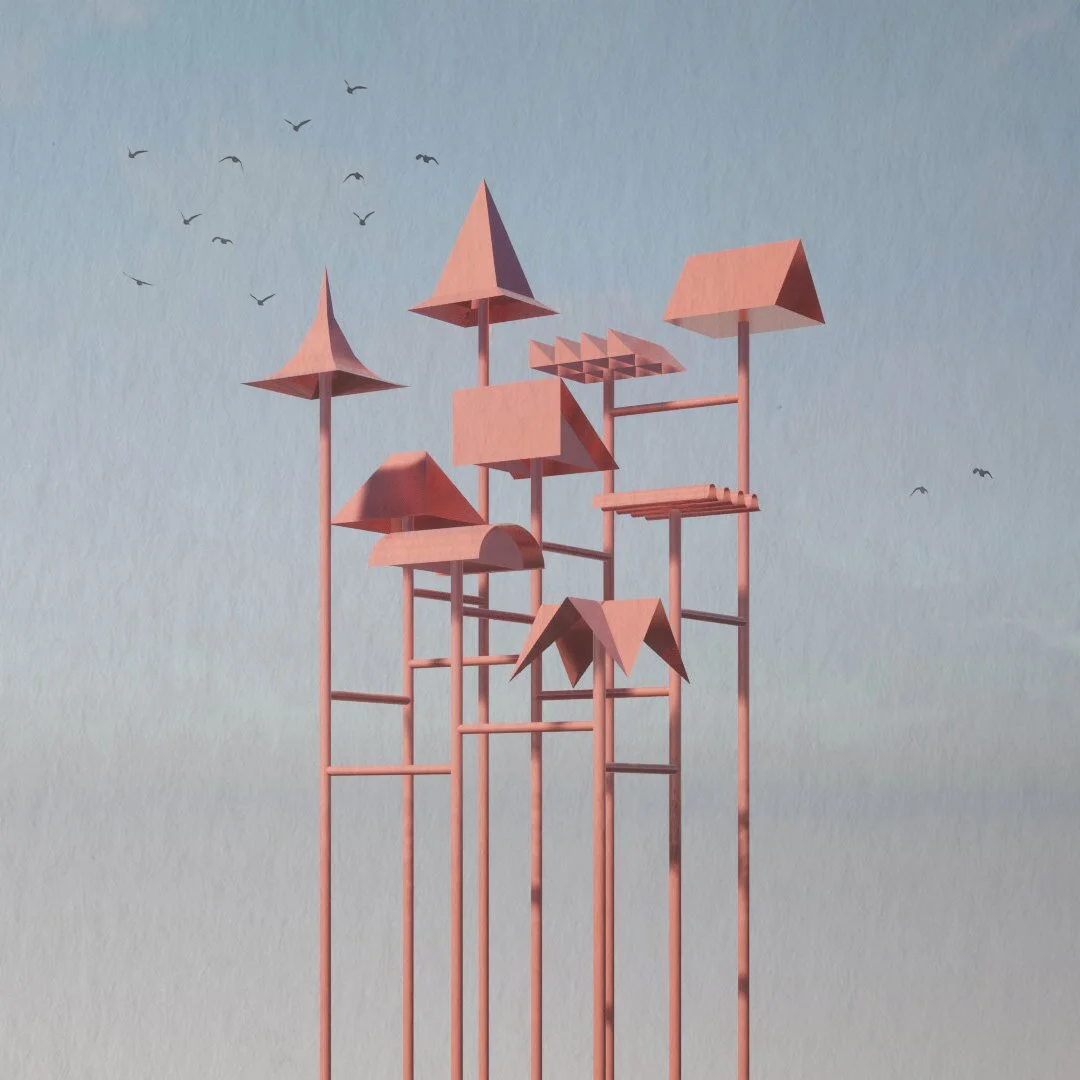
We imagined The Roof of Roofs a collective canopy, composed by a series of variations on a rooftop - from gabled roofs to hipped roofs, valley roofs and dome roofs, arched roofs and mansard roofs, pyramid roofs and butterfly roofs - suspended on slender poles. We imagine those as bird houses, offering shelter to the non-human inhabitants of De Akkers and of the surrounding polder, while becoming a canopy visible from afar, a sort of mirror/mirage of the neighbourhood, which becomes its portal towards the the Herreweg. Beneath it, one could find shelter from the rain, and have a moment to look upwards, towards the flying roofs of De Akkers.